Posts

FERTILIZATION

Image
                                                                       FERTILIZATION   POLLEN TUBE GROWTH: The microspore is the first cell of the male gametophyte and is haploid. The development of male gametophyte takes place while they are still in the microsporangium. The nucleus of the microspore divides mitotically to form a vegetative and a generative nucleus. A wall is laid around the generative nucleus resulting in the formation of two unequal cells, a large irregular nucleus bearing with abundant food reserve called vegetative cell and a small generative cell. Generally at this 2 celled stage, the pollens are liberated from the anth...
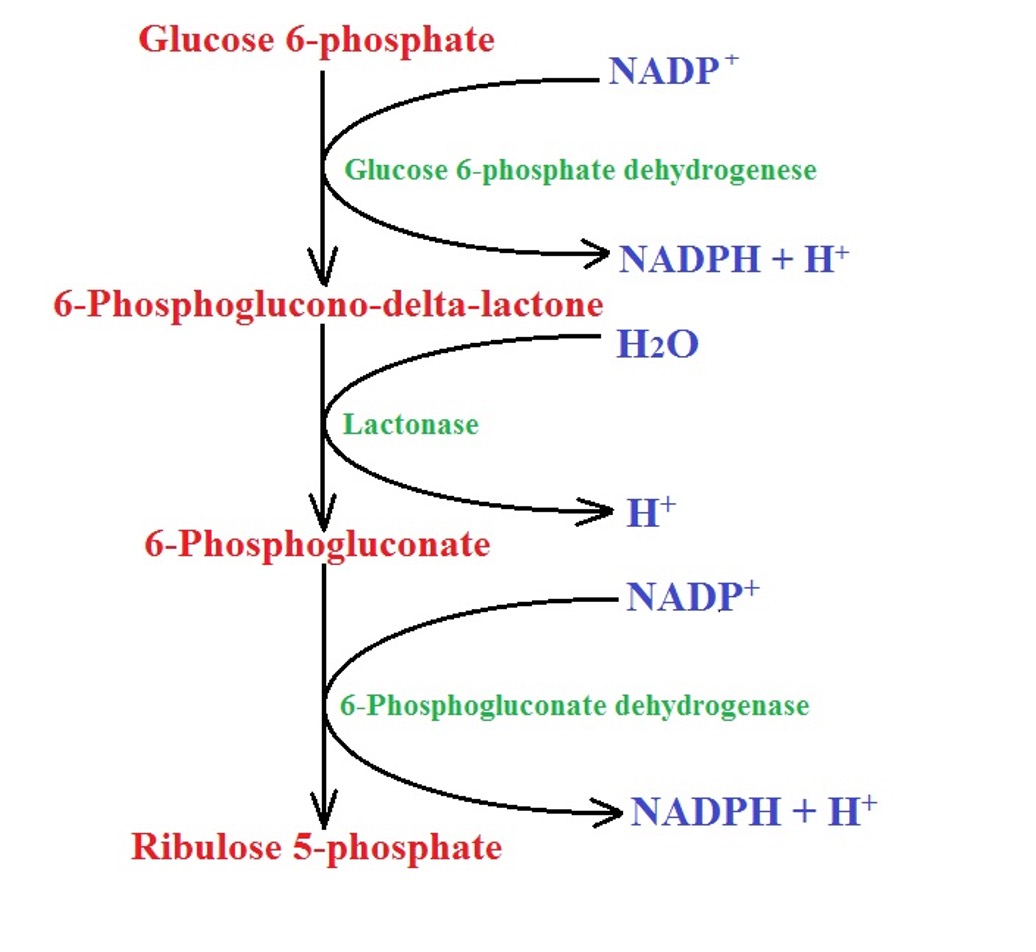
Pentose Phosphate Pathway(PPP) (Phospho Gluconate Pathway)

Image
Pentose Phosphate Pathway(PPP) (Phospho Gluconate Pathway) During respiration breakdown of glucose in cytosol occurs both by glycolysis (about 2/3) as well as by oxidative pentose phosphate pathway (about 1/3). Pentose phosphate pathway was described by Warburg, Dickens and Lipmann (1938). Hence, it is also called Warburg-Dickens-Lipmann pathway. It takes place in cytoplasm of mature plant cells. It is an alternate way for breakdown of glucose. It is also known as Hexose monophosphate shunt (HMP Shunt) or Direct Oxidative Pathway.  It consists of two phases,  oxidative phase and  non-oxidative phase.  The oxidative events convert six molecules of six carbon Glucose-6-phosphate to 6 molecules of five carbon sugar Ribulose-5 phosphate with loss of 6CO2 molecules and generation of 12  NADPH + H á¶§ (not  NADH).  The remaining reactions known as non-oxidative pathway, convert Ribulose-5-phosphate molecules to various intermediates such as Ribose-5- phosph...

NUCLEIC ACIDS - TYPES, STRUCTURE OF NUCLEIC ACIDS

Image
                                                                NUECLIC ACID Definition: Nucleic acids are the principle information molecules of the cell. Both DNA and RNA are polymers of purine and pyrimidine nucleotides. Hydrogen bonding between complementary base pairs allows nucleic acids to direct their self replication. Types Of Nucleic Acids: DNA and RNA are the two kinds of nucleic acids. These were originally isolated from cell nucleus. They are present in all known cells and viruses with special coded genetic programme with detailed and specific instructions for each organism heredity. DNA and RNA are polymers of monomers called nucleotides, each of which is composed of a nitrogen base, a pentose sugar and a phosphate. A purine or a pyrimidine and a ribose or deoxyribose sugar is called nucleoside. A ni...

Plant Growth

Image
                                                                                  Plant Growth Characteristics of growth: Growth increases in protoplasm at cellular level. Stem and roots are indeterminate in growth due to continuous cell division and is called open form of growth. The primary growth of the plant is due to the activity of apical meristem where, new cells are added to root and shoot apex causing linear growth of plant body. The secondary vascular cambium and cork cambium add new cells to cause increase in girth. Leaves, flowers and fruits are limited in growth or of determinate or closed form growth. Monocarpic annual plants produce flowers only once during lifetime and dies. Example: Paddy and Bean Monocarpic perennials produce fl...

Endosperm - definition, types

Image
                                                                           ENDOSPERM Definition: Endosperm is unique among the plant tissues with regard to its origin and development. Endosperm is the most common nutritive tissue for the developing embryo in angiosperms. Endosperm is the product of fertilization and is triploid. After double fertilization the egg is called zygote, and the fusion product of polars and the second ale gamete is termed as the primary endosperm nucleus. The former develops into an originated embryo whereas the latter gives to an almost formless tissue, the endosperm. Types of Endosperms: Nuclear endosperm Cellular endosperm Helobial endosperm Cereal endosperm Ruminate endosperm Nuclear endosperm:         ...

Glycolysis or EMP Pathway

Image
                                                                                  Glycolysis   Glycolysis is a linear series of reactions in which 6-carbon glucose is split into two molecules of 3-carbon pyruvic acid. The enzymes which are required for glycolysis are present in the cytoplasm. The reactions of glycolysis were worked out in yeast cells by three scientists Gustav Embden (German), Otto Meyerhoff (German) and J Parnas (Polish) and so it is also called as EMP pathway. It is the first and common stage for both aerobic and anaerobic respiration. It is divided into two phases. 1. Preparatory phase or endergonic phase or hexose phase (steps 1-5). 2. Pay off phase or oxidative phase or exergonic phase or triose phase (steps 6-10). ...

parthenocarpy- types, significance, definition

Image
                                                                       PARTHENOCARPY   Definition: According to Noll (1902), who introduced the term, parthenocarpy means the development of fruits without pollination or any other stimulus. Since then the definition of parthenocarpy has undergone slight modification and, according to the present concept, it refers to “the formation of fruits without fertilization” (Nitsch, 1965). The parthenocarpic development of fruit may require the pollination stimulus (stimulative parthenocarpy) or it may occur in unpollinated flowers (vegetative parthenocarpy) “seedless fruits” should not be considered synonymo...