Posts

Enzymes- classification, nomenclature, mechanism, properties and Michaelis-Menton kinetics

Image
                                                                            ENZYMES Definition: Enzymes are globular proteins that catalyse the many thousands of metabolic reactions taking place within cells and organism. The molecules involved in such reactions are metabolites. Metabolism consists of chains and cycles of enzyme-catalysed reactions, such as respiration, photosynthesis, protein synthesis and other pathways. These reactions are classified as anabolic (building up of organic molecules). Synthesis of proteins from amino acids and synthesis of polysaccharides from simple sugars are examples of anabolic reaction...

Cytokinin and their role

Image
                                                                                            Cytokinin Discovery: The presence of cell division inducing substances in plants was first demonstrated by Haberlandt in 1913 in Coconut milk (liquid endosperm of coconut) which contains cell division inducing substances. In 1954, Skoog and Miller discovered that autoclaved DNA from herring sperm stimulated cell division in tobacco pith cells. They called this cell division inducing principle as kinetin (chemical structure: 6-Furfuryl Amino Acid). This does not occur in plants. In 1963, Lethan introduced the term cytokinin. In 1964, Lethan and Miller isolated and identified a new cytokinin called Zeatin from unripe grains ...

Gibberellins and their role

Image
  Gibberellins Discovery: The effect of gibberellins had been known in Japan since early 1800 where certain rice plants were found to suffer from ‘Bakanae’ or foolish seedling disease. This disease was found by Kurosawa(1926) to be caused by a fungus Gibberella fujikuroi. The active substance was separated from fungus and named as gibberellin by Yabuta (1935). These are more than 100 gibberellins reported from both fungi and higher plants. They are noted as GA1, GA2, GA3 and so on. GA3 is the first discovered gibberellin. In 1938, Yabuta and Sumiki isolated gibberellin in crystalline form. In1955, Brain et al., gave the name gibberellic acid. In 1961, Cross et al., established its structure. Occurrence: The major site of gibberellin production in plants is parts like embryo, roots and young leaves near the tip. Immature seeds are rich in gibberellins. Precursors: The gibberellins are chemically related to terpenoids (natural rubber, carotenoids and steroids) formed by 5...

AUXIN AND ITS ROLE

Image
                                                                      PHYTOHORMONES   Definition: The term phytohormones is implied to those chemical substances which are synthesized by plants and thus, naturally occurring. On the other hand, there are several manufactured chemicals which often resemble the hormones in physiological action and even in molecular structure. Recently, another two groups, the brassinosteroids and polyamines were also known to behave like hormones. Characteristics of phytohormones: Usually produced in tips of roots, stems and leaves. Transfer of hormones from one place to another takes part through conductive systems. They are required in trace quantities. All hormones are organic in nature. There are no specialized cells or organs for their secretion. They are capable of i...

embryo sac - types, explanation

Image
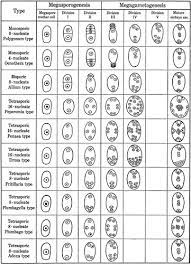
  TYPES OF EMBRYO SAC Monosporic Embryo Sac The embryo sac in which only one out of four megaspores is involved in the development of the embryo sac is called as Monosporic Embryo Sac. Since all the nuclei in such embryo sac are derived through mitoses of a single nucleus, hence all nuclei are genetically identical. On the basis of number of nuclei in the mature embryo sac, Maheshwari recognised two types - 8 - nucleate and 4- nucleate. 8- nucleate or Polygonum type: This type of embryo sac development was first discovered in Polygonum divaricatum for the first time by Strasburger, hence it is called as polygonum type. Since, this is common in Angiosperms(81%), it is called as normal type. Of the four megaspores formed from the megaspore mother cell, only one megaspore situated towards chalazal end remains functional and the remaining three situated towards micropylar end degenerate. The functional megaspore divides and gives rise to 2 nuclei, one of which moves to the mi...

Mechanism Of Stomatal Movement

Image
  MECHANISM OF STOMATAL MOVEMENTS   1) STARCH- SUGAR HYPOTHESIS: It is proposed by sayer in 1923 IN LIGHT: IN DARK: Photosynthesis occurs Respiration occurs pH increases ↑ pH decreases ↓ Carbon dioxide Co ₂↓ Carbon dioxide Co ₂ ↑ Enzyme: phosphorylase is used Enzyme: phosphorylase is used Sugar increases ↑ so endosmosis take place Starch increases ↑ so exosmosis take place Turgor pressure increases ↑ Turgor pressure decreases ↓ Diffusion pressure deficit (DPD) increases ↑ Diffusion pressure deficit (DPD) decreases ↓ Stomata = opens Stomata = closes Starch is converted in to glucose -1- phosphate glucose -1- phosphate is converted in to Starch       2) STEWARD HYPOTHESIS: It is proposed by steward in ...